
AI is changing project management: What we’re learning and planning for

AI is shaking up how we all work, and project management is no exception. Before, AI was mostly about simple automation. Now, we're seeing smarter, more proactive tools that will fundamentally change a PM’s role.
Nobody has a crystal ball, but based on our internal exploration, here's what we’re learning and anticipating.
The AI Assistant Today: What’s Working
We have one main question bubbling: Can AI really be a digital assistant that makes a PM's life easier and more efficient, freeing us up to focus on more pressing matters? Here’s where AI is already winning for us:
- Brainstorming and Ideation: It’s a fantastic ideation partner for tough problems, and great for initial analysis or research. Just remember: junk in, junk out. The more detail you give it (context!), the better output it can provide, leading to better results.
- Automations: AI helps eliminate repetitive, manual tasks. If it's built into tools you already use (like Monday, Jira, or Google Suite), it’s a quick win that saves your brainpower for more complex work.
- Knowledge Bases – Creating a Single Source of Truth: We're experimenting with project-specific knowledge bases where teams dump transcripts, notes, links—everything—into tools like NotebookLM or Confluence (via Rovo). Instead of hunting down 'who has the latest update’, this enables teammates to quickly ask the tool for relevant project information. And since it's all internal data, you can easily double-check the sources.
What’s the core takeaway? AI can only solve the problem after a human has figured out what the problem actually is.
The Critical Limit: Where AI Falls Flat (For Now)
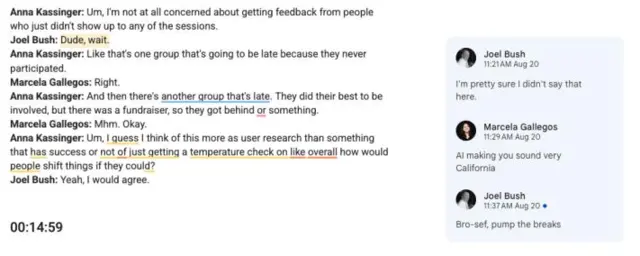
Building on the above, we can’t trust AI completely. It's powerful, but it’s not infallible. Human double-checking is a non-negotiable.
- Human Validation: We quickly learned AI-generated call transcripts weren't always spot-on, which meant bad notes and wrong action items. The fix? Be smart about when and how you use the AI, and make sure call participants always review the final transcripts and notes.
- An Assistant, Not a Replacement: Think of AI as a super-powerful aide that drafts reports and timelines (and more). But, and an important but, it still needs a human to verify, refine, analyze data, and apply the specific context of your organization. If we let the bots run the show, we risk missing critical problems or, worse, using incorrect summaries and data to inform decision making.
What's Next: The Future of AI in Operations
AI is constantly changing. Here's my take on where things are headed…
Next 6 Months: The Rise of the AI Co-Pilot
Expect AI to blend even deeper into your everyday tools, and the "hallucinations" will happen less often. The technology will start proactively supporting PMs and handling complexity like a pro. We expect it to accurately:
- Analyze conversations.
- Proactively suggest project resource shifts.
- Flag communication risks before they become a problem.
This means PMs need to get smarter about AI—learning how to properly check and use its output – AI literacy! Your time on admin tasks will decrease and time for strategic planning and proactive risk will increase.
Next 1-3 Years: Hello, Autonomous Agents
AI agents have been hyped for a while, but we believe they’ll start becoming useful in the next few years (or sooner). These "digital colleagues" will be able to tackle entire, multi-step workflows without you needing to click every button.
- Autonomous workflow: Picture this: An autonomous agent takes a project brief, generates a draft work breakdown structure, autopopulates the project plan with estimated timelines, and assigns tasks based on team availability.
- Continuous oversight: These agents will (likely) also keep an eye on project status and tweak the plan automatically as the project moves forward. That’s great, but don’t forget the key lesson from above: check the work!
At this point, you might be wondering, "So what will humans be doing?" Good question. A PM’s job shifts to oversight—managing the system, not doing the admin work. But wait…there’s more…read on.
Next 5 Years: The Human-in-the-Loop Strategist
I recently heard an analogy that resonated: AI will handle the "science" of operations, and our role will focus on the "art."
The "science" of running a project includes the tactical elements like task tracking, scheduling, data analysis, and risk forecasting.
Meanwhile, we humans focus on the "art":
- Emotional intelligence.
- Coaching your team and navigating complex human dynamics.
- Interpreting AI results and blending it with our own knowledge.
The project managers of the future will lead mixed teams of people and bots. That means you need a deep understanding of project management and the ability to "talk" to both people and machines—checking the bots' work and knowing how to pivot when things go sideways. The real power of AI isn't replacing human knowledge, it's boosting it, allowing us to focus on creativity, empathy, and strategic thinking to make projects more successful.
Whether you’re a rookie or seasoned PM, it’s time to build your AI tool portfolio – ensure certifications and/or courses include AI fluency!

